Prof. Robert Stewart and "Jesus: The Evidence"
By Republican Digest Contributor |
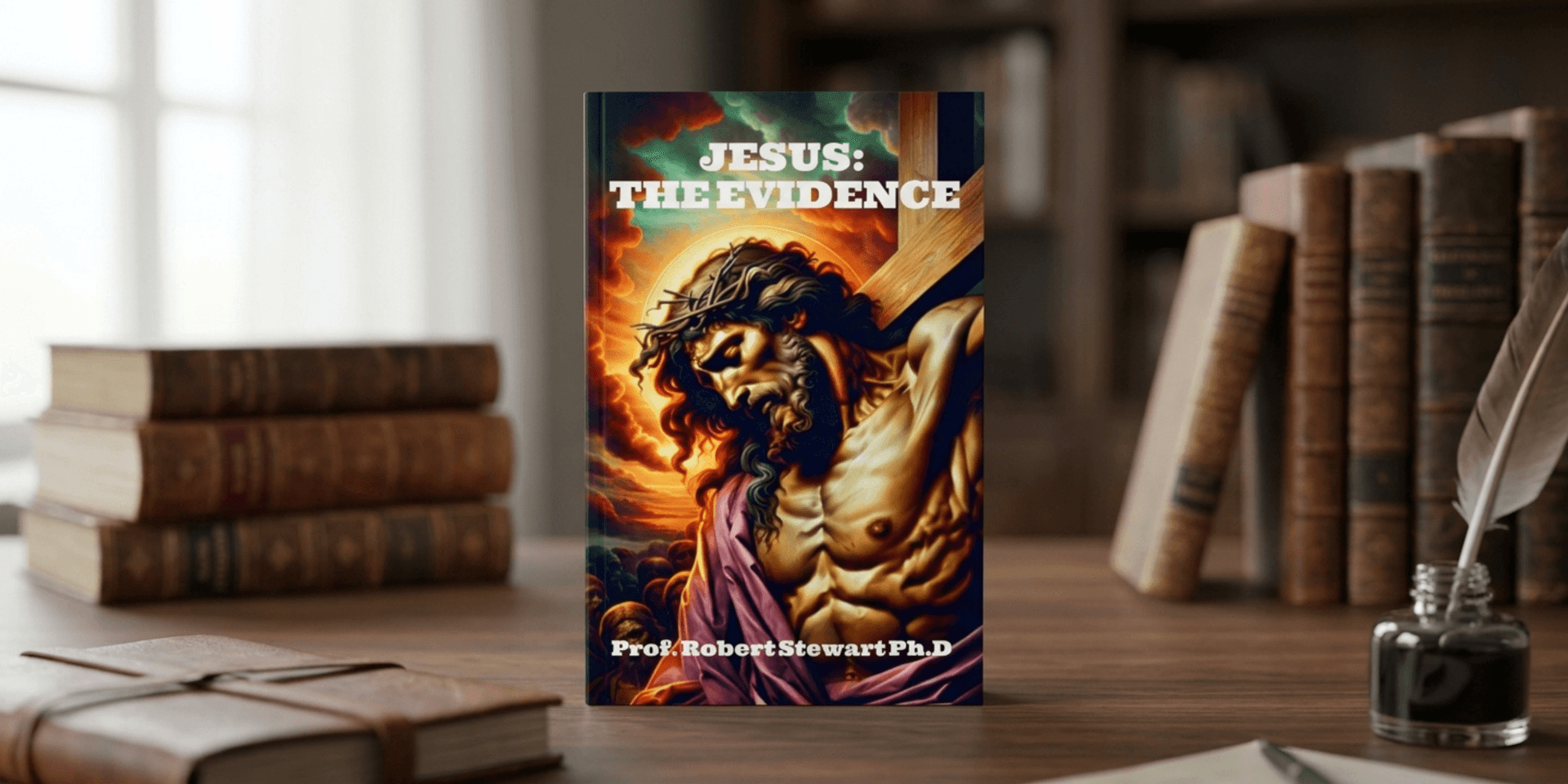
A jazz virtuoso and scholar unveils hidden evidence about Jesus in a bold new book.
Few lives read like a puzzle assembled from impossible pieces. Prof. Robert Stewart, Ph.D., has been a clandestine operative, a Pulitzer Prize-adjacent saxophonist, a scholar of world religions, and now the author of a book that challenges what many believe they already know. His latest work, "Jesus: The Evidence," arrives not as a quiet academic footnote but as a provocation aimed at the heart of modern faith.
A Life Lived on Many Stages
Prof. Robert Stewart first drew notice at the University of California, Berkeley, where he earned a Doctor of Science in Astronomy. He later received an Honorary Doctorate in World Religions from Provident University in Delaware. Yet academic titles tell only part of his story. His fields of expertise span martial arts, world religions, science, and the study of the Occult. For years, music served as what he calls his "deep cover," a camouflage life that masked quieter, more consequential work.
That camouflage, however, was no small thing. As a multi-instrumentalist fluent in saxophone, piano, flute, drums, and voice, Stewart built a reputation that reached the highest levels of the jazz world. He recorded two major-label albums, "The Force" and "In the Gutta," for Quincy Jones and Qwest/Warner Bros. Records. He played lead tenor saxophone on Wynton Marsalis's Pulitzer Prize-winning "Blood on the Fields," and he studied as a protégé of the legendary Pharoah Sanders.
Acclaim From the Jazz World
The praise for Stewart's musicianship is both specific and striking. Los Angeles Times journalist Bill Kohlhaase described him as a player known for "his unique, personal sound and remarkably inventive improvisations." Jazz critic Jason Ankeny called Stewart one of the most impressive jazz saxophonists to emerge at the end of the twentieth century. The late drummer Billy Higgins went further still, naming Stewart "perhaps the most important young artist to come along in decades."
Behind the public acclaim lived a man connected to some of the most influential figures of his era. Stewart counts Congresswoman and former Mayor Barbara Lee among his longtime friends. He also shared the stage many times with the celebrated vocalist Cassandra Wilson, whom he regarded as a god-sister and who recently passed away. These relationships reveal a man woven deeply into the cultural fabric of American music and public life.
A Scholar Who Turned to the Deepest Questions
For all his accomplishments on the bandstand, Prof. Robert Stewart has always circled back to the largest questions a person can ask. Who created the mind? Who authored space and time? His worldview is unflinching and expressed without hedging. "Man's ego is certainly exorbitant," he writes, "but he will forever remain a petulant subordinate to the God that created his mind; the God that created space and time."
That conviction shapes everything in his scholarly work. Stewart views the natural order not as random accident but as deliberate design. "Pattern constants are God's divine design that only the spiritually blind deny of His signs," he states. For Stewart, science and faith are not rivals. They are two languages describing the same Author. His background in astronomy and metaphysics gives him an unusual vantage point, one where the telescope and the scripture point toward the same horizon.
Inside "Jesus: The Evidence"
Stewart's most controversial contribution is his book "Jesus: The Evidence." In it, he presents what he describes as new evidence about Jesus, material he argues that many clergymen today would prefer to keep hidden from the public. The claim is bold, and Stewart does not soften it. He believes faith deserves scrutiny, not shelter, and that honest inquiry strengthens belief rather than threatening it.
The book invites readers to reconsider assumptions they may have carried for a lifetime. Its very title ideas, including "Thought That You Knew Jesus? Think Again," capture the spirit of the project. Stewart does not ask readers to abandon their faith. He asks them to examine it more closely, to look at the signs and the evidence with open eyes. For a man who spent decades studying both the measurable universe and the world's religions, this is a natural destination.
What makes Stewart's perspective distinct is the rare combination he brings to the page. Most authors who write about Jesus come from theology alone. Stewart arrives with a scientist's discipline, a scholar's breadth, and a lifetime of experience that few can match. He has studied the cosmos through the lens of astronomy, explored the world's religious traditions, and worked in fields most people encounter only in fiction. That range gives his argument an unusual weight.
Why His Message Resonates Now
In an age when many feel caught between cold science and blind faith, Stewart offers a third path. He argues that genuine investigation leads toward God, not away from Him. His writing speaks to seekers who refuse easy answers, to believers who want their faith tested and proven, and to skeptics willing to follow evidence wherever it leads.
Stewart's life itself is the first piece of evidence for his argument. A man of such varied gifts, music, science, scholarship, and more, insists that none of it arose by chance. He sees design in the patterns of the universe and purpose in the arc of his own extraordinary journey. For readers hungry for substance, his voice carries the authority of someone who has lived many lives and reflected deeply on each one.
The result is a body of work that refuses to fit neatly into any single category. It is part scholarship, part testimony, and part challenge. Stewart does not write to comfort. He writes to awaken.
Begin Your Own Investigation
If you have ever wondered whether faith can withstand honest questions, "Jesus: The Evidence" offers a place to begin. Prof. Robert Stewart does not hand readers conclusions. He hands them the evidence and trusts them to think. Readers are invited to explore his book, discover his music, and encounter a mind that has roamed from the stars to the scriptures. His website offers a place to read his quotes, browse his writings, and decide for oneself whether one truly knew Jesus after all.
Explore More About Prof. Robert Stewart
Connect with Prof. Robert Stewart, Amazon, Wikipedia, YouTube, and Facebook.

Republican Digest Contributor
This article features partner, contributor, or branded content from a third party. Members of the Republican Digest editorial staff were not involved in the creation of this content. All views and opinions are those of the contributor alone.