NASA Confirms Swift Observatory Will Return To Earth After Nearly 22 Years In Space
By Republican Digest Contributor |
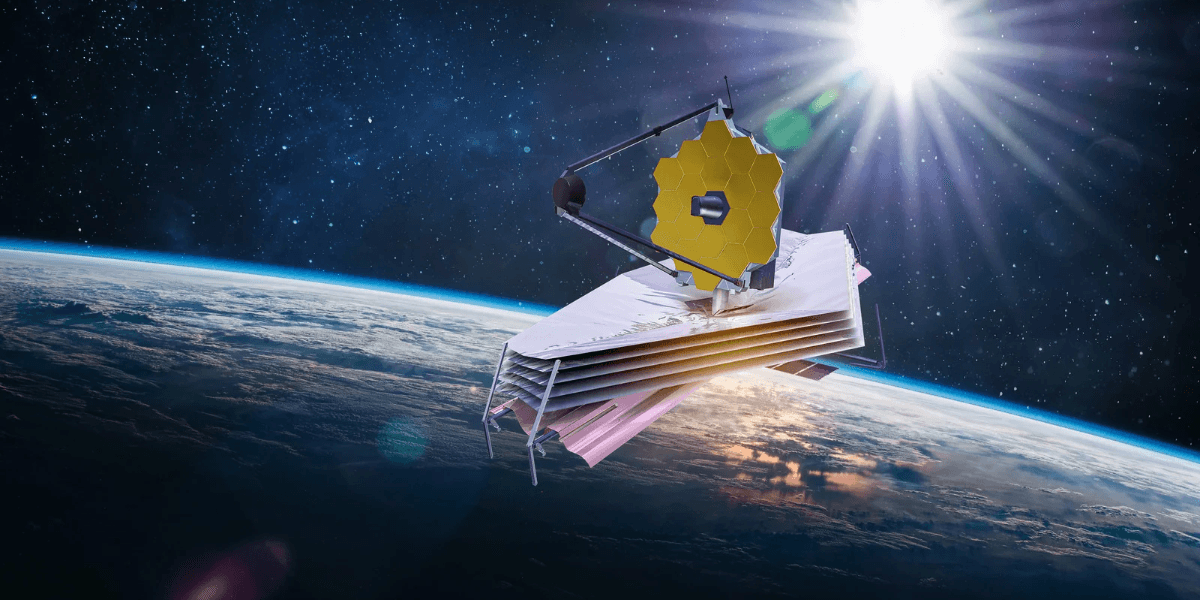
NASA announces the approaching return of its Swift Observatory, ending a historic mission that transformed the study of cosmic explosions.
The final chapter of one of America's longest operating space observatories is approaching. On November 2, 2026, NASA announced that its Neil Gehrels Swift Observatory is expected to reenter Earth's atmosphere on November 4, bringing nearly 22 years of scientific exploration to an end. The spacecraft, originally designed for a two year mission, has spent more than two decades observing powerful cosmic explosions and helping astronomers understand the universe. Its approaching return represents both a milestone in American space research and a reminder of the challenges involved in maintaining aging spacecraft.
NASA Swift Observatory Reentry Expected November 4
According to NASA's November 2 announcement, the approximately 3,200 pound spacecraft is expected to enter Earth's atmosphere around 3:30 a.m. Eastern Standard Time on Wednesday, November 4. The U.S. Space Force provided that estimate with an uncertainty window of 11 hours. NASA expects most of the observatory to burn up during atmospheric entry, although some components could survive. The agency emphasized that the precise location of surviving debris cannot be established until the spacecraft's descent becomes more predictable. NASA and the Space Force will continue monitoring its trajectory.
What Americans Should Know About The Reentry
The approaching return has raised questions about whether falling spacecraft debris could pose a danger to people on Earth. NASA estimates the risk of harm to any individual at approximately one in 2,100. Because of Swift's orbital inclination, potential debris locations are restricted to areas between 20.6 degrees north and 20.6 degrees south latitude. This region includes portions of several continents and large stretches of ocean. The agency has not identified a specific impact location. Importantly, the announced probability describes the overall risk associated with the event, not a prediction that debris will strike a populated area.
A Historic American Space Mission Reaches Its Final Chapter
Swift launched from Cape Canaveral, Florida, on November 20, 2004, aboard a Delta II rocket. Its original assignment was to investigate gamma ray bursts, extraordinary releases of energy associated with some of the universe's most violent events. Equipped with three telescopes, the observatory could detect these bursts and quickly direct its instruments toward their sources. That rapid response allowed scientists to study events that might otherwise disappear before detailed observations could begin. Over time, Swift became a valuable resource for astronomers investigating black holes, exploding stars, active galaxies, and objects within our solar system.
The mission's scientific achievements extended far beyond its initial expectations. Swift observed more than 2,000 gamma ray bursts and approximately 1,400 exploding stars. Its ability to rapidly identify unusual events also helped other observatories, including the Hubble and James Webb space telescopes, conduct follow up investigations. This cooperation expanded the scientific value of individual discoveries and demonstrated how different space missions can work together to answer complex questions about the universe.
Why NASA Could Not Extend The Observatory's Life
Swift's approaching reentry followed years of orbital decline. Increased solar activity contributed to atmospheric drag, gradually lowering the spacecraft's orbit. NASA pursued a possible rescue through a commercial servicing effort involving Katalyst Space and its robotic spacecraft, Link. However, the attempted intervention did not succeed. The servicing spacecraft encountered difficulties and never approached closely enough to complete its intended operation. Swift continued making observations afterward, but by late October its declining altitude prevented stable scientific operations. Its systems were subsequently shut down.
What Swift's Final Mission Teaches America About Space Exploration
The end of Swift highlights a broader challenge facing the American space program: scientific spacecraft can remain valuable long after their original design lifetimes, but orbital conditions and aging equipment eventually impose limits. Swift's extended service demonstrates the benefits of durable engineering, continued mission support, and coordinated research. At the same time, the unsuccessful servicing attempt illustrates the technical difficulty of maintaining satellites already operating in space. These lessons are relevant as government agencies and commercial aerospace companies develop future technologies for satellite maintenance, orbital operations, and spacecraft disposal.
For American taxpayers and policymakers interested in the nation's scientific capabilities, Swift also offers an example of how a relatively short planned mission can produce decades of research. Its observations supported discoveries across several areas of astronomy, while its rapid alert system helped scientists around the world investigate events as they occurred. The observatory's retirement leaves an important scientific role to be addressed by future missions and existing research facilities.
Follow NASA's Official Updates On Swift's Return
As November 4 approaches, the most useful information will come from updated tracking estimates rather than speculation about potential debris locations.
Although Swift's operational life has ended, its scientific legacy remains significant. Nearly 22 years after launch, the observatory stands as an example of American engineering, international scientific cooperation, and the lasting value of space exploration.

Republican Digest Contributor
This article features partner, contributor, or branded content from a third party. Members of the Republican Digest editorial staff were not involved in the creation of this content. All views and opinions are those of the contributor alone.