
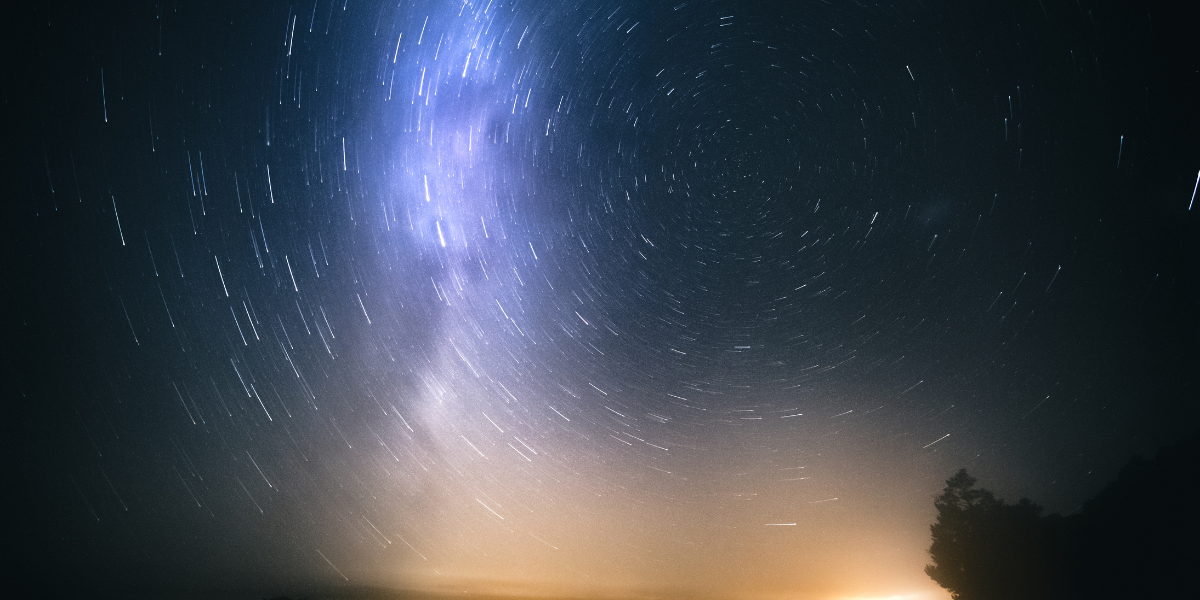
The Perseid meteor shower reaches its annual peak over the United States around August 13, giving skywatchers an opportunity to observe one of the most prominent meteor displays of the year. This year’s peak is especially favorable because it occurs near a new moon, leaving the night sky relatively dark and improving visibility for observers away from city lights.
The Perseids are produced as Earth passes through a stream of dust and debris associated with Comet 109P/Swift-Tuttle. As these tiny particles enter Earth’s atmosphere at extremely high speeds, they heat the surrounding air and create bright streaks of light across the night sky. Although commonly called shooting stars, these streaks are not stars. They are atmospheric flashes produced by material originating from a comet.
The Perseid meteor shower is active each summer, generally beginning in July and continuing into August. Its activity increases toward the annual maximum before gradually declining. Around the peak, observers under ideal conditions can potentially see dozens of meteors per hour, although actual viewing numbers depend heavily on location, weather, light pollution and the observer’s ability to see the entire sky.
The timing of the 2026 peak provides an important advantage. The Moon is near its new phase, meaning there is little bright moonlight washing out the sky. This can make a significant difference for meteor watching because many meteors are relatively faint and can easily be hidden by competing light.
For observers across the United States, the best viewing opportunities generally occur after midnight and during the hours before dawn. The Perseid radiant, the area of the sky from which the meteors appear to originate, is located in the constellation Perseus. As the night progresses, the radiant rises higher in the northeastern sky, increasing the number of meteors potentially visible.
People do not need expensive equipment to watch the shower. In fact, telescopes and binoculars are generally unnecessary because meteors can appear across a wide portion of the sky. A comfortable location with a broad, unobstructed view is more useful. Observers should also give their eyes time to adjust to darkness after arriving at a viewing location.
Getting away from urban areas can substantially improve the experience. Streetlights, buildings, commercial lighting and other sources of artificial illumination make it more difficult to see faint meteors. Rural areas, parks and other locations with limited light pollution generally provide better conditions, provided that access is safe and permitted.
Weather remains one of the biggest variables for anyone planning to watch the Perseids. Clear skies are essential, and clouds can completely obscure the display regardless of how favorable the astronomical conditions may be. Local forecasts should therefore be considered when selecting a viewing location and deciding when to go outside.
The Perseid peak is also occurring shortly after a major astronomical event earlier in August: a total solar eclipse visible along a path that crossed parts of Greenland, Iceland and Spain on August 12. The eclipse and meteor shower are separate astronomical events, but their close timing makes this period particularly notable for skywatchers.
The Perseids are significant not because they represent a rare or dangerous event, but because they provide an accessible way for people to observe a recurring process in the solar system. Earth regularly moves through streams of material left behind by comets. When that material encounters the atmosphere, the result can be seen from the ground as a meteor shower.
For Americans hoping to catch the Perseids on or around August 13, the most important factors are darkness, clear weather and patience. The shower does not begin or end at one exact moment, and individual viewing conditions vary considerably from one location to another. Some meteors can also be seen on nights before and after the maximum.
The 2026 Perseid peak therefore offers a particularly good opportunity for amateur skywatchers. With the Moon providing minimal interference and the shower reaching its annual maximum, people in areas with clear, dark skies may be able to see a substantial number of meteors without specialized equipment.
For those unable to observe the peak because of clouds or other local conditions, the Perseids remain active beyond August 13. The broader shower continues for several days, although activity decreases after the maximum. The event serves as a reminder that some of the most impressive sights in the night sky remain accessible simply by looking upward under favorable conditions.