
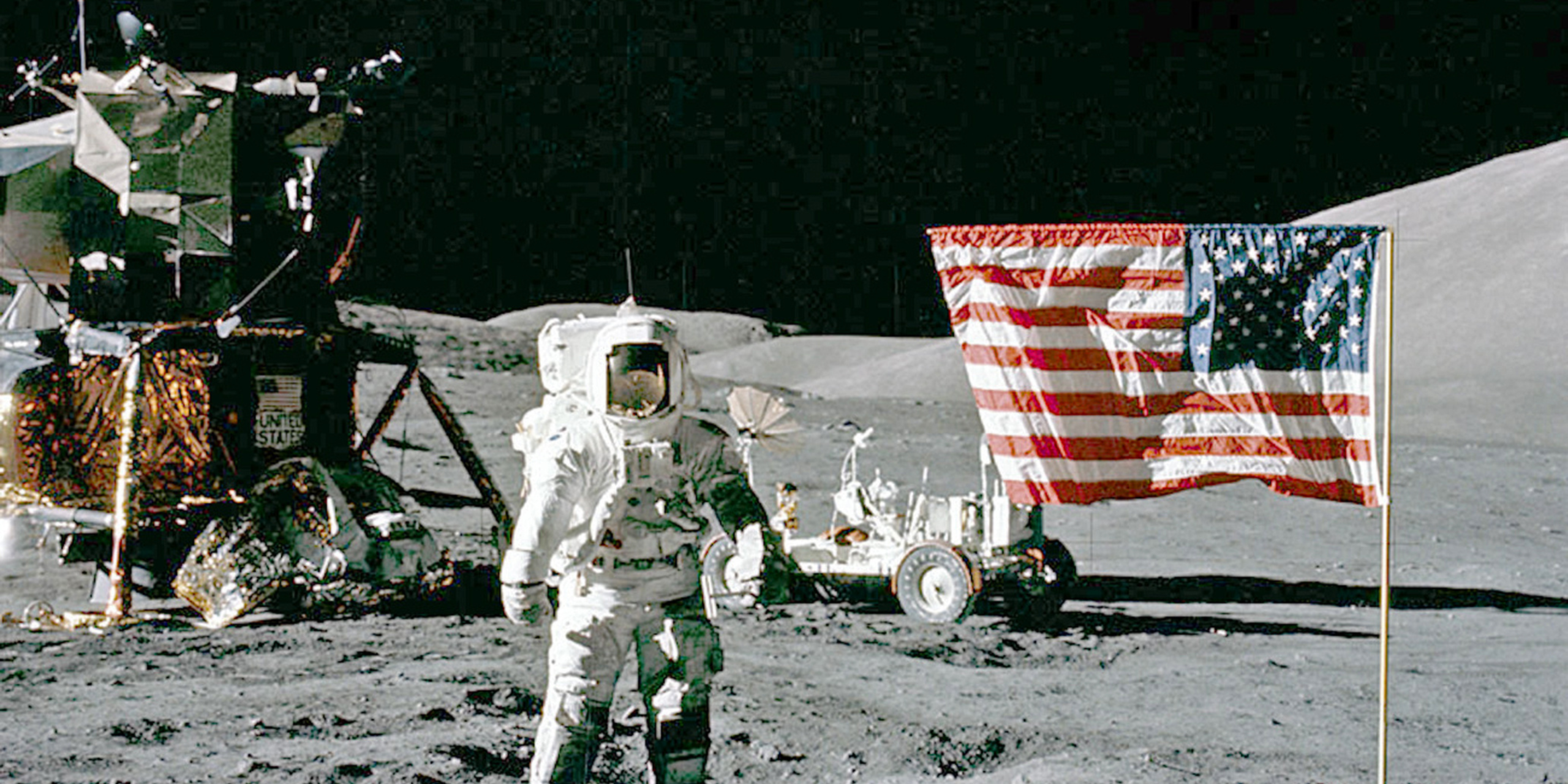
The United States took a major step forward in space exploration this week as NASA unveiled new details about its long-term Moon Base initiative under the Artemis program. The agency announced multiple lunar mission contracts, expanded partnerships with American aerospace companies, and outlined a broader strategy aimed at establishing a sustained human presence on the Moon by the early 2030s.
NASA officials confirmed that several uncrewed lunar missions are scheduled to begin as early as late 2026, marking one of the most ambitious expansions of America’s space program in decades. The initiative is designed to strengthen U.S. leadership in space exploration while laying the groundwork for future missions to Mars.
During a press conference at NASA Headquarters in Washington, NASA Administrator Jared Isaacman described the Moon Base initiative as “America’s and humanity’s first outpost on another celestial world.” The announcement included new contracts for lunar rovers, cargo landers, and robotic drone systems that will help prepare the Moon’s south pole region for future astronaut missions.
According to NASA, the first phase of the program will focus on robotic exploration and infrastructure testing. The agency selected Blue Origin, Firefly Aerospace, Astrolab, and Lunar Outpost for several key mission components. Blue Origin will use its Blue Moon Mark 1 Endurance lander to deliver scientific payloads to the lunar surface, while Firefly Aerospace will help develop drone systems capable of scouting terrain and identifying safe landing areas.
NASA stated that the Moon Base project will unfold in multiple phases through the 2030s. Initial missions will test power systems, mobility technologies, communications equipment, and cargo transportation. Future phases are expected to include semi-permanent habitat structures, surface reactors, and advanced scientific laboratories.
One of the primary goals of the project is to establish a sustainable operational presence near the Moon’s south pole. Scientists believe the region may contain water ice deposits inside permanently shadowed craters, which could eventually support long-term human activity by providing water, oxygen, and fuel resources for deep-space missions.
NASA officials also emphasized the economic and technological impact of the Artemis program. The agency’s strategy relies heavily on public-private partnerships with American aerospace firms, continuing a model that has expanded rapidly over the last decade. Industry analysts say the approach encourages innovation while supporting high-skilled manufacturing and engineering jobs across the United States.
The recent contract announcements highlight the growing role of private American companies in space exploration. Astrolab and Lunar Outpost received contracts worth more than $400 million combined to develop lunar terrain vehicles designed for both autonomous and astronaut-assisted operations. These vehicles are expected to support future crewed Artemis missions beginning later this decade.
NASA estimates that dozens of lunar missions may eventually be required to transport infrastructure, scientific equipment, and cargo needed to establish a functioning Moon Base. Agency officials indicated that the long-term strategy includes annual lunar surface missions and expanded operational capabilities throughout the 2030s.
The Artemis program itself has become one of the largest federal science and technology initiatives currently underway in the United States. Federal budget proposals released earlier by NASA projected billions of dollars in funding for lunar and Mars exploration programs. Supporters argue that continued investment in space exploration strengthens national competitiveness, scientific leadership, and technological advancement.
The latest announcements also reflect increasing international competition in space exploration. While NASA’s focus remains scientific and exploratory, officials have repeatedly stressed the importance of maintaining American leadership in lunar operations and deep-space missions. The United States is currently advancing multiple Artemis missions while expanding partnerships with allied nations and domestic aerospace companies.
Space policy experts note that lunar exploration has evolved significantly since the Apollo era. Unlike previous short-term Moon landings, the Artemis initiative is designed around long-duration operations, repeat missions, and permanent infrastructure development. NASA’s updated plans include expanded launch schedules, cargo transportation systems, and the gradual assembly of operational facilities on the lunar surface.
Public interest in the Moon program has also increased following recent Artemis mission milestones. NASA’s Artemis II mission successfully completed a crewed lunar orbit mission earlier this year, marking the first human journey around the Moon since 1972. That mission is widely viewed as a critical step toward future lunar surface operations.
The agency says its current timeline targets additional crewed missions later this decade, with sustained lunar operations potentially beginning in the early 2030s. NASA leaders maintain that the Moon Base initiative will also serve as a testing ground for technologies needed for future human missions to Mars.
For many observers, the latest developments represent more than a scientific achievement. The expansion of the Artemis program highlights America’s continued investment in innovation, engineering, advanced manufacturing, and long-term exploration capabilities. As NASA prepares for a new era of lunar operations, the Moon Base initiative is increasingly being viewed as one of the defining national infrastructure and technology projects of the decade.